
Hydrous Kaolin: Properties, Benefits & Industrial Uses

The clay mineral hydrous kaolin, which is composed mostly of kaolinite, occurs naturally. Due to its high brightness, chemical stability, low abrasiveness, and fine particle size it is used widely in the manufacture of ceramics, paints and rubber. The unique properties of this filler make it an effective functional additive and performance enhancer in multiple industries.
Why is hydrous Kaolin so valued? The combination of qualities that few minerals possess is what makes hydrous kaolin so valuable: excellent brightness, high purity, fine particle size distribution and exceptional chemical stability. Its properties allow it to be used as a coating agent, a reinforcing element, and / or auxiliary processing material.
The guide will tell you everything about hydrous Kaolin. Learn what hydrous kaolin is and how it’s used in different industries. You will also learn about the unique properties of this product.
What Is Hydrous Kaolin And How Does It Form?
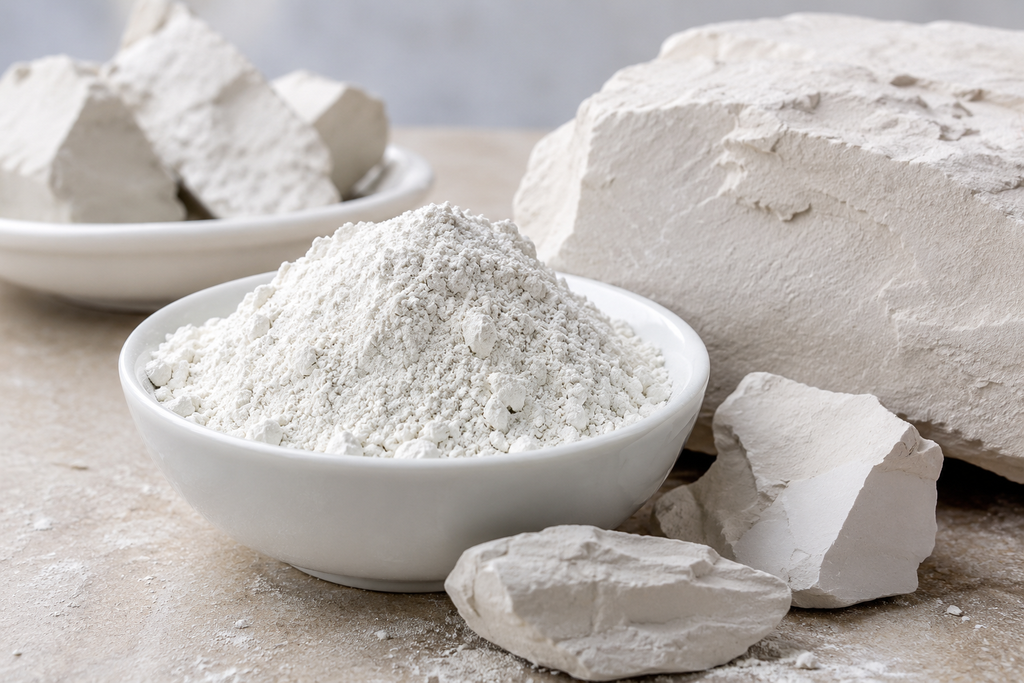
It is composed of the clay mineral kaolinite, which is mostly Al2Si2O5 (OH)4. The formation of hydrous kaolin is the result of long-term chemical and weathering decomposition in feldspar rich rocks. This geological process can last for millions of years.
Here, the term “hydrous”, is crucial. Hydrous kaolin is different from calcined (which is made by heating the kaolin to high temperatures), as it retains both its crystal structure and chemically-bound water molecules. Hydrous kaolin’s softness, plasticity and fine particle properties are due to this structural difference. Calcined kaolin does not have these characteristics.
What Are The Main Properties Of Hydrous Kaolin?
Hydrous kaolin’s industrial value is directly related to its chemical and physical properties. The mineral’s performance is affected by each of its characteristics.
The fine particle size distribution: is one of the key properties. Hydrous kaolin can be incorporated into plastics and rubber formulations with ease thanks to its fine particles.
Its high brightness and whiteness: makes it ideal for use as a filler or coating pigment in paint and paper applications, especially where appearance is important.
High chemical stability: Hydrous Kaolin is safe to use in different formulations because it does not react under normal conditions.
The low abrasiveness: is an advantage over harder mineral fillers.
A high degree of plasticity: enables ceramics manufacturers to easily shape their products before firing. The hydrous nature (water retention) of the mineral is the reason for this.
A high purity product with minimum impurities: is a key factor in ensuring consistent quality control of industrial production.
Softness and smooth texture: are important for better surfaces in ceramics and polymer compounds, coatings and ceramics.
These properties enable hydrous Kaolin to perform multiple functions simultaneously, including filler, reinforcement material, coating agent and rheology moderator, depending on application.
What Are The Industrial Applications Of Hydrous Kaolin?
The use of hydrous kaolin in a variety of different industries is widespread. Here’s a look at the industries where it has the most impact.
What is the use of hydrous kaolin in ceramics?
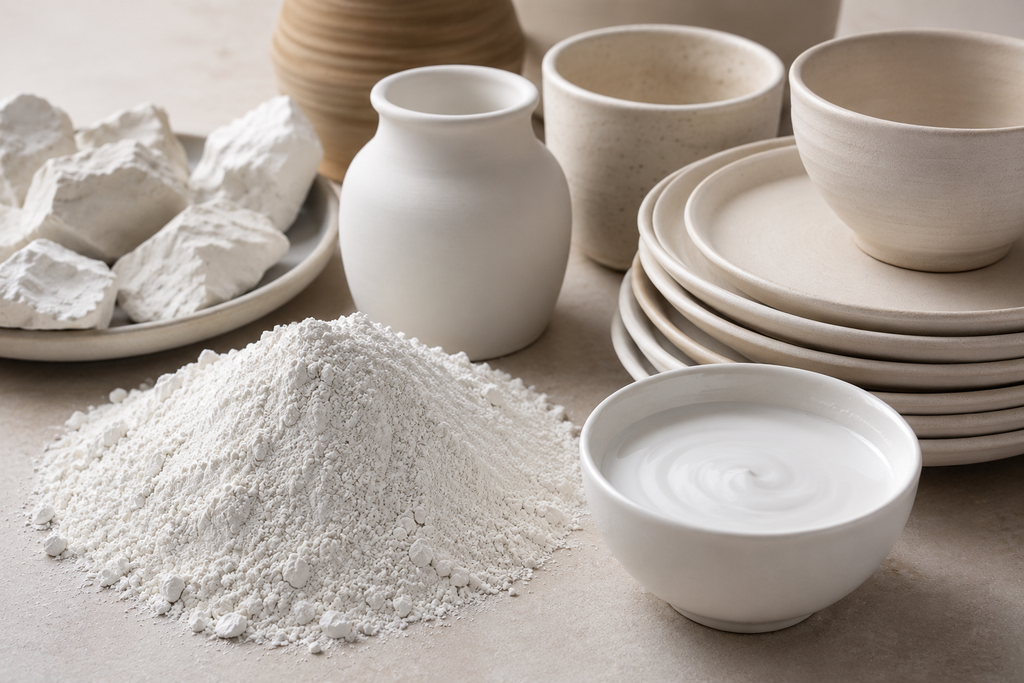
Ceramics is one of world’s largest users of hydrous Kaolin. The mineral is used as the primary raw material in ceramic production for body, glazes and technical components.
Ceramics is a major contribution of the company.
- Plasticity in shaping : Hydrous kaolin is easier to mould and shape ceramics before they are fired
- Strength when drying This mineral is responsible for the strength of green ceramics (unfired). It also helps them resist cracking.
- Surface Finish: After firing, hydrous kaolin creates surfaces that are smoother and more uniform.
- Whiteness and brightness: Enhances visual quality in finished ceramic products
Hydrous Kaolin is essential to the production of ceramic tiles, sanitaryware and tableware.
What Is The Use Of Hydrous Kaolin In Paper Industry?
Hydrous Kaolin is used by paper manufacturers as both a pigment for coating and as filler in the actual paper. The fine particle size of hydrous kaolin and its optical properties improve the product’s quality.
Paper manufacturing has many benefits.
- Improved surface smoothness Coating paper in hydrous kaolin produces a uniform, even surface that is ideal for printing.
- Brightness and opacity The natural whiteness of the mineral improves paper’s appearance, and helps reduce show-through.
- Improved printability A smoother surface will allow ink adhere to the paper more evenly, producing crisper images and texts.
Hydrous kaolin is a popular choice to produce premium magazines and printing papers.
What Is The Use Of Hydrous Kaolin In Paint And Coatings Industry?
The hydrous kaolin is used as an additive and filler in the formulation of paints. The chemical stability of the kaolin and its ability to control particle size make it a good choice for architectural and industrial coatings.
Paint and coatings have many advantages.
- Increased pigment suspension Hydrous Kaolin improves pigment distribution throughout paint
- Improved uniformity of coating: This reduces the inconsistency in film thickness when applied.
- Improved opacity: Due to the mineral’s high opacity, less expensive titanium dioxide is needed for white or light-colored paints.
Hydrous Kaolin is a natural additive that helps paint manufacturers create more consistent and smoother-applying paints.
What Is The Use Of Hydrous Kaolin In Rubber Industry?
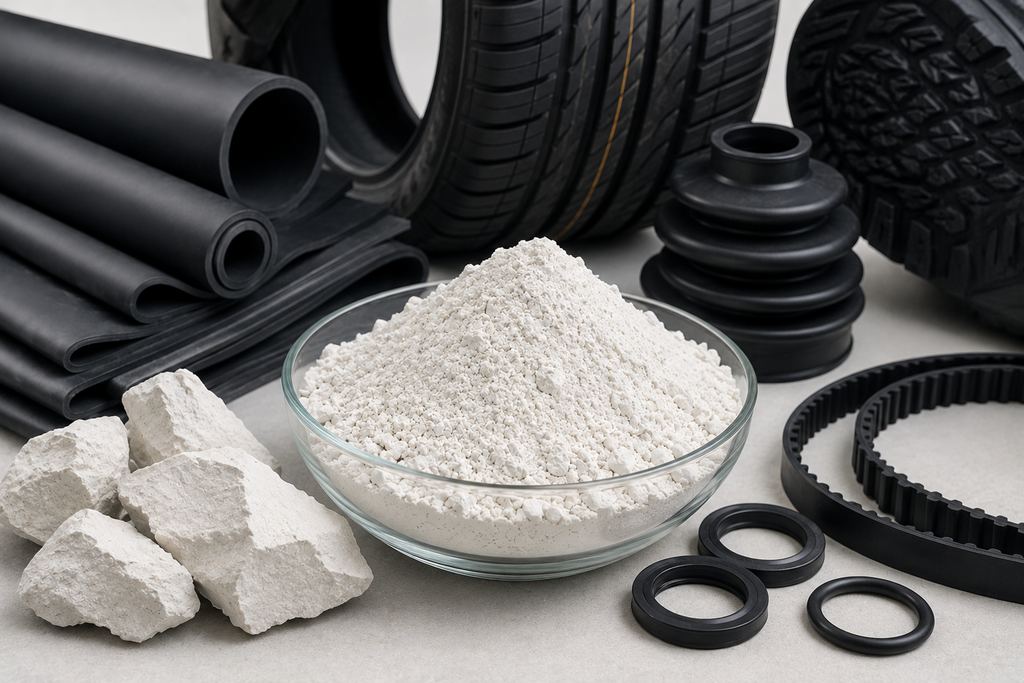
Hydrous kaolin is used by rubber manufacturers as an abrasive filler to improve the mechanical properties of their products. The low abrasiveness of the kaolin and its fine particles make it suitable for most rubber processing techniques.
The following are some of the ways that hydrous kaolin can improve rubber performance:
- Reinforced Rubber with Increased Tensile Strength: Reinforced Rubber can resist greater mechanical stresses without tearing
- Improved wear resistance: products filled with hydrous Kaolin will last longer when subjected to friction and mechanical loads
- Increased dimensional stabil: Mineral reduces deformation of finished rubber products when heated or under pressure
- Improved processing performance Hydrous Kaolin enhances rubber compounding flow and mixability
Rubber is a versatile material that can be used to produce rubber seals and gaskets as well as automotive parts, rubber hoses, and rubber molded goods.
What Is The Use Of Hydrous Kaolin In Plastics?
Hydrous kaolin is used by plastic manufacturers as a filler in order to reduce costs and improve the material’s properties. The kaolin is compatible with many polymers, such as polypropylene and PVC.
Hydrous kaolin is used in the manufacture of plastics for a variety of reasons.
- Increased rigidity and stiffness: filled plastics retain their shape under mechanical loads better
- Improved dimensional stability : Mineral reduces shrinkage during cooling and processing
- Improved surface finish Fine-particle Hydrous Kaolin smooths surfaces of plastic parts that are molded or extruded.
- Lower Production Costs: By replacing a part of the polymer by kaolin, material costs are reduced
Packaging films, household products, construction profiles and automotive plastic parts are all common applications.
What Is The Use Of Hydrous Kaolin In The Fiberglass Industry?
In the glass fibre production process, hydrous kaolin is used as an aluminosilicate with high purity. The consistent chemical composition of hydrous kaolin, its low levels of impurities, and the fine size particles help to produce fiberglass that is stronger, more durable, and easier to process.
Hydrous Kaolin is a key ingredient in the manufacture of fiberglass.
- Better glass composition: The hydrous kaolin is a good source of silica and alumina, which helps achieve desired glass chemistry.
- Increased mechanical strength: This mineral is used to produce fiberglass that has greater mechanical resistance and strength.
- Improved thermal stability: Hydrous Kaolin improves the heat resistance of fiberglass products and their dimensional stability.
- High-quality manufacturing: The uniformity of the particle size, purity, and consistency of product quality are all supported by
Hydrous Kaolin is a valuable raw material in the manufacture of fiberglass, which can be used for construction materials, automobile components, electrical insulation and wind turbine blades.
What Are The Benefits Of Using Hydrous Kaolin In Manufacturing?
Hydrous kaolin is used in all of these industries and offers a set of consistent manufacturing benefits that are the reason why this material remains so popular.
Manufacturing benefits include:
- Improves the brightness and appearance finished products
- Increases the mechanical strength of rubber and composite materials
- Improves surface smoothness for ceramics and coatings
- Controls viscosity, rheology and viscosity of liquid formulations like paints and slurries
- Lowers production costs through the replacement of more expensive raw material or by reducing processing times
Hydrous kaolin is a valuable strategic mineral because of its combination of cost-effectiveness and performance improvement.
Hydrous Kaolin Is Processed Before Industrial Use
The raw kaolin ore has to go through a number of processing stages before it can meet the standards set by buyers in industry. Processing is designed to eliminate impurities, regulate particle size and produce a consistent chemical composition and brightness.
Hydrous Kaolin is processed in the following standard ways:
- Kaolin Mining: The ore is mined from underground or open-pit deposits
- Initial screening and crushing: The large ore is broken up and then screened.
- Dispersion and washing: Kaolin particles are dispersed by mixing the crushed ore with water.
- Classification : Slurry is passed through centrifuges and hydrocyclones that separate the particles according to size. Impurities like quartz or mica are removed.
- Filtration : The excess water from the classified Kaolin Slurry is removed
- Kaolin Drying : the kaolin is then dried until it reaches a constant moisture content.
- Milling the dried kaolin and controlling particle size: This is done to ensure that it meets specific requirements for particle size.
The final product is tested to meet the technical specification at every step.
What Is The Best Way To Choose A Hydrous Kaolin Supplier?
It is equally important to select a reputable supplier as it is to choose the correct grade of hydrous Kaolin. Mineral quality that is inconsistent can affect the performance of a product, cause production interruptions and raise costs.
Manufacturers should consider the following when evaluating hydrous kaolin suppliers:
- Chemical composition and mineral purity: Supplier should supply detailed technical data sheets that confirm kaolinite levels and impurities.
- The particle size distribution and the brightness are two important parameters that vary between suppliers and grades, but must be matched to specific requirements.
- Need for consistent supply of bulk orders: Big-scale producers require reliable and uninterrupted supplies across all production batches
- Quality control and laboratory testing A reliable supplier will conduct regular tests and provide certificates of analyses
- Support for export capability and logistic support: Export documentation management and reliable shipping are critical to international buyers.
Are you looking for an Hydrous Caolin supplier and manufacturer that is trusted? Our high-purity hydrous Kaolin is available in a variety of sizes and colors. It has a consistent brightness and dependable quality. We manufacture our products to strict industry standards, and offer them in bulk for domestic and international distribution.
Hydrous Kaolin: The Facts and Figures
It is a mineral used in dozens of products. The combination of its high brightness, small particle size, chemical stability, and low-abrasiveness make it hard to replace.
It is used by ceramics producers to improve the plasticity and brightness of their products. It is used by paper manufacturers to enhance the print quality of their papers and smoothen out their surfaces. It is used in paint formulations to control costs and improve opacity. It is used by rubber and plastics producers to increase strength, surface finish, and stability.
FAQs
It is used in the manufacture of ceramics, paper, coatings and rubber. Kaolin’s primary uses are coating pigment and functional filler. Kaolin is also used as a rheology moderator, reinforcing agents, and a material for reinforcing.
The kaolin is soft and plastic because of this. Calcined Kaolin can be made by heating clay hydrous at high temperatures. The water molecules are pushed out and the crystal structure is altered. This results in a higher degree of hardness, brightness and less plasticity. Hydrous kaolin is recommended when plasticity and brightness are desired. When brightness and hardness are desired, calcined kaolin is the best choice.
The ceramics are more pliable and easier to mold when it is added. After firing, it contributes to the increased brightness and smoothness. Its properties make hydrous kaolin essential in the manufacture of tile, tableware, and sanitaryware
Hydrous kaolin is mined, washed, filtered, dried, and then milled. In each stage, the process eliminates contaminants while regulating particle size.
Manufacturers should take into account the following factors: purity of minerals, distribution of particles, brightening, supply consistency, certificates for quality, logistical and export capabilities as well as suppliers’ ability to deliver detailed technical information and bulk supplies. To maintain consistent production quality, it is important to work with suppliers that provide detailed technical information.
Hydrous kaolin is chemically non-reactive and inert under standard industrial processing. Its low toxicity, compatibility and safety make it a popular ingredient in paints, coatings, rubbers, plastics and other products.

