
What Are the Different Types of Silica Sand?

Have you ever wondered why sand that is used in the production of crystal clear glass does not look like sand from a playground? Both are silica, but play on different teams. The wrong silica grade can lead to cloudy glasses, weak castings or an ineffective filtration system.
Silica sand has many uses in industry. The global market for silica will be worth $26 billion by 2025. It is used in everything: fracking, glassware and water filters, solar panel, golf bunkers, etc. Not all silica sand is the same.
Silica Sand: What is it?
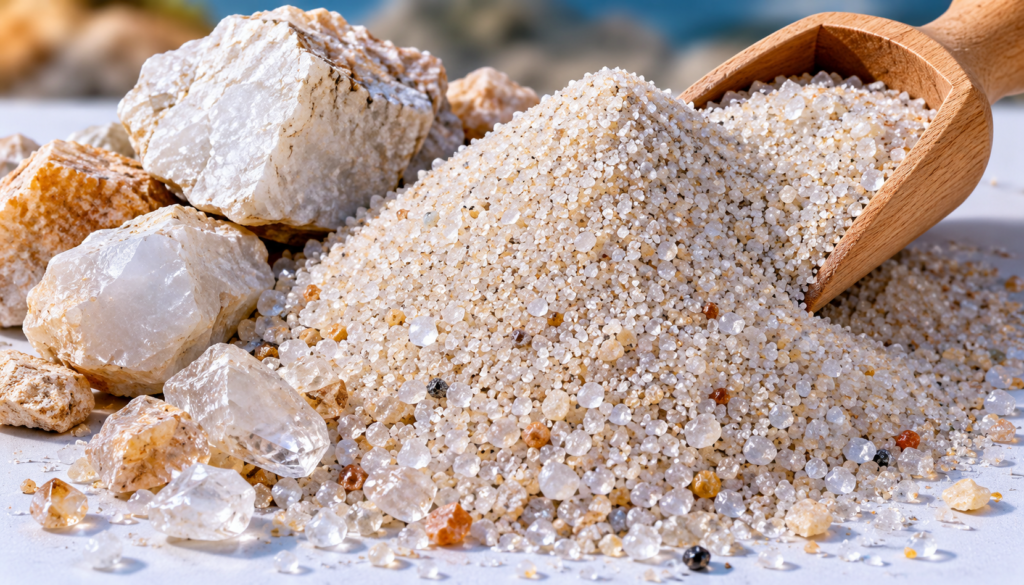
The mineral in quartz is silicon dioxide, or SiO2. It’s for this reason that it’s often called “quartz-sand.” Purity is determined by the SiO2 level in the sand. The more SiO2 there is, the better the quality of the sand.
Three main factors are used to sort silica sand into different types:
- Source or deposit from which it originates
- Purity level or the amount of silicon dioxide in it
- It’s industrial applications are best for.
Clay, iron and other minerals are found in sand that is taken directly from the beach or riverbed. The sand refined down to 99.9% silica is an entirely different animal. Understanding these grades of silica makes it easier to choose the right one for your application.
Silica Sand Types: Comparison Table
Here’s an overview of all seven types and the key properties they possess.
| Silica Sand Types | Appearance | Composition and Key Characteristics | Key Applications |
| Sand for Making Glass | Fine, bright white grains | High thermal stability, >99% SiO2, low iron oxide. | Containers made of flat glass, special glass and fiberglass |
| Foundry Sand | Brown to Tan, rough, angular | High refractoriness, high permeability and 95-99% sio2. | Metal casting molds and cores |
| Frac Sand | Round, milky white and spherical | >99% SiO2, excellent crush resistance | Proppant for hydraulic fracture (oil/gas). |
| Sand Filter | Round, off-white, to beige | Acid-resistant, chemically inert SiO2 >95% | Filtration of water and wastewater, swimming pools |
| Abrasive Sand | Gray to brown, coarse and angular | High hardness (Mohs 7), >95% siO2. | Sandblasting, grinding and polishing |
| Construction Sand | Variable grains in brown or reddish color | 80-95% SiO2, contains clay, silt, minerals | Concrete, mortar, asphalt, shingles |
| Specialty Sands | From white (golf course) to beige light (playground), | In addition to being washed, the SiO2 is a high-quality product that contains >95% of it. | Ceramics, playsand and golf bunkers |
Let’s now look at what each ticks.
Silica Sand: The Seven Main Types
1. Sand for Glass Making
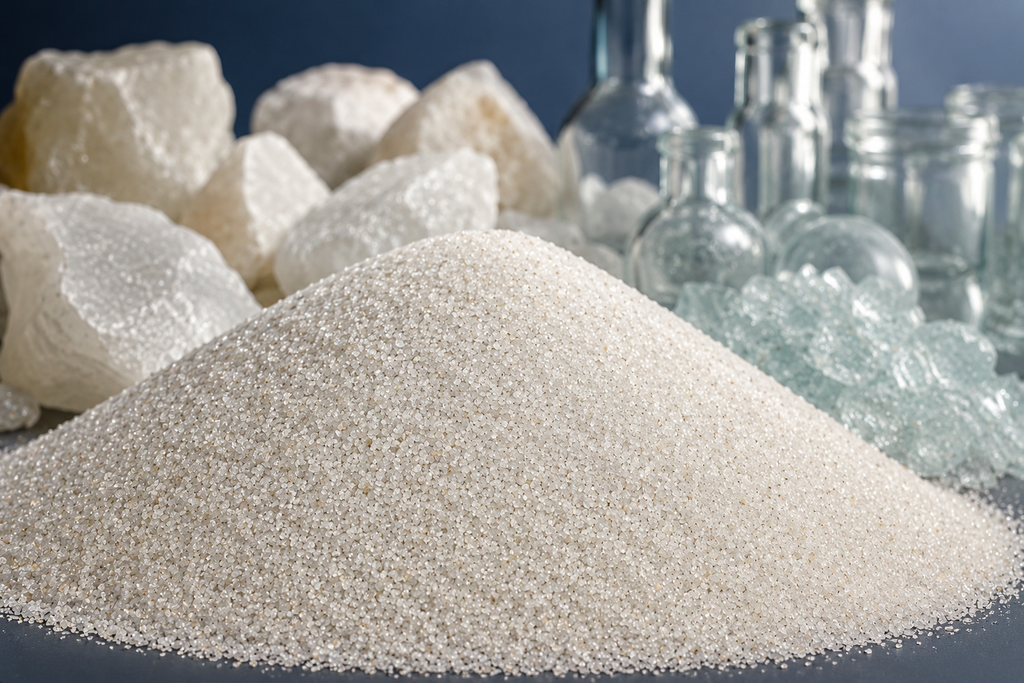
The glass-making silica is one of the world’s purest types of sand. The sand is so white and clean that it’s often called “white silica.”
Composition It is a high-purity material, at least 99.5% sio2 but sometimes even up to 99.99%. The iron oxide content is extremely low, at less than 0.6%. This is why the glass produced from this material comes out crystal clear and not tinted.
Characteristics:
- Fine, consistent grains
- Particle size uniform (0.1-0.6mm)
- Shapes ranging from sub-rounded to angular
Properties of chemical substances:
- It is chemically inert so that it doesn’t react.
- High melting point (approximately 1,713 degC).
- Thermal stability
Mines: High-purity deposits are found in the U.S., Australia and China (mainly Illinois and Wisconsin).
Application: Flat glass, Fiberglass, Borosilicate Lab Glass, and Specialty Glass Products.
When clarity is important, the glass-making process sand must be subjected to strict quality controls. A small amount of iron or aluminum can cause a batch to be ruined, so make sure you buy it from a reputable supplier.
2. Foundry Sand
Foundry sand, a quartz sand with a medium purity level, is used to make metal cores and molds. The demand for foundry sand has increased in recent years, partly due to the scarcity of natural sand.
Content: High silica, typically 95-98% SiO2. It is often mixed with clay or other binders to strengthen casting molds.
Characteristics:
- Fine grains (0.5-0.1 mm)
- Shape angular for improved bonding
- High Permeability
Properties of chemical substances:
- The high refractoriness of the metal prevents it from breaking out through the mold
- High resistance to melting metal erosion
Areas of mining: Typical in Wisconsin and Minnesota (areas of St. Peter Sandstone) in the U.S., plus ancient deposits found in Rajasthan in India.
Application: Create molds and cores to metal cast, from automobile parts to plumbing fixtures.
Avoid this common mistake: Foundry sand does not wear out quickly. The formation of cristobalite, which increases the mold’s durability over time, can make it stronger with repeated reuse.
3. Frac Sand
It is the purest grade of silica available. The name is derived from the fact that it acts as “proppant”, which holds open fractures during oil and natural gas extraction.
The composition is: A high-purity, crush-resistant quartz sand with a SiO2 content of at least 99%. It’s made up of round, crush-resistant grain that can withstand intense pressure.
Characteristics:
- Uniform grain size (0.4-0.8 mm)
- Compaction is prevented by high sphericity
- The crush resistance is above 6,000 psi
Properties of chemical substances:
- Clay content is low
- Acidic environment: Inert.
Mine regions: Concentrated in areas where fracking occurs, such as Wisconsin, Illinois and Texas (in-basin Sand, prized for its shorter transportation distances).
Application: Hydrolic fracturing. This is where the hydraulic fracturing props up fractures within shale rocks to allow oil and gas flow.
This is the fastest way to look at it: Transportation costs are what make or break economics for frac sand. Local supply is important because it almost always beats frac sand mined far from the drilling site.
4. Filter Sand
Filter sand, a refined grade made from silica deposits only has one purpose: to clean water. It is used by hotels, industrial plants, municipalities and sports stadiums.
Minimum 95% SiO2. The particles have been graded to be uniform and this is why it can trap debris in the water.
Characteristics:
- Round, uniform grain
- Available in two sizes.
- Water filtration 0.4 to 0.8 mm
- Pool filters 0.6 to 1.2 mm thick
Properties of chemical substances:
- Chemically inert
- Will not degrade when exposed to acidic and chlorinated waters
Regions of mining: Major reserves are found in North America, India and Ohio.
Application: Swimming pool filtering, industrial effluent cleansing, wastewater treatment.
Takeaway: The uniform size of the particles and its high drainage capability are what makes filter sand effective. A good grading allows more water to pass while still removing impurities.
5. Industrial Abrasive Sand
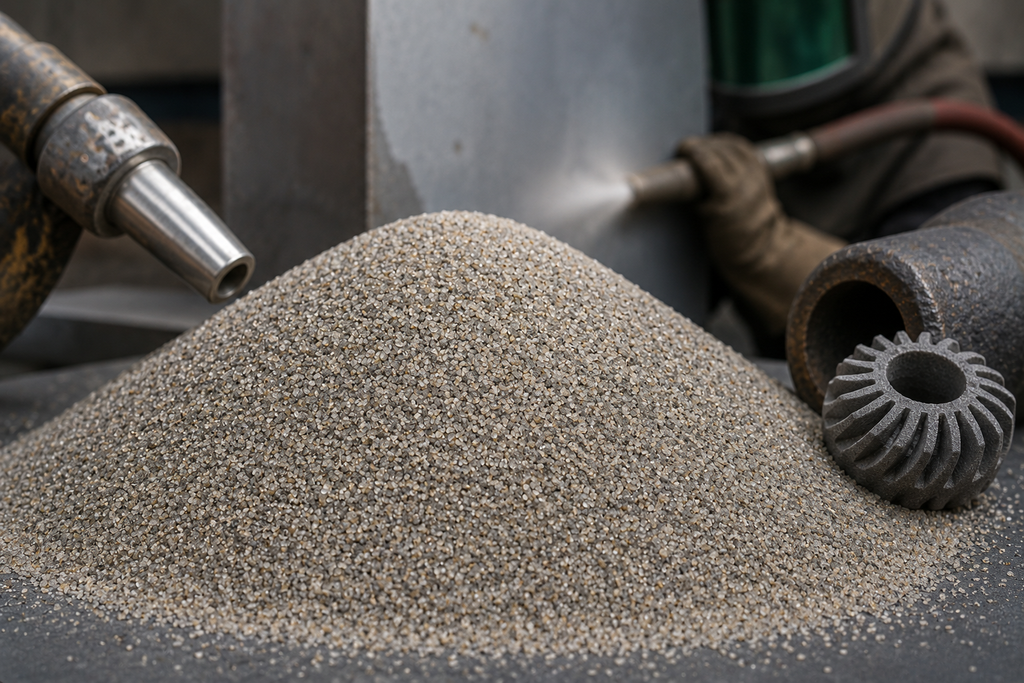
The roughest, most durable abrasive is used for surfaces to be stripped, polished, or prepared. This is also the grade that has the most warnings about safety.
Content: More that 95% SiO2, moderate content of silica. The surface is often covered to prevent other particles from getting in.
Characteristics:
- Coarse, angular grains (0.5-2.0 mm)
- The Mohs 7 scale is very hard
Properties of chemical substances:
- It is inert but produces respirable dust which requires proper safety equipment
Mines: Deposits are found in India and Rajasthan, as well in Australia and the Great Lakes Region of America.
Application: Surface preparation, including sandblasting, grinding and polishing.
Avoid the common mistake: Not taking safety precautions. Inhaled dust from abrasive sand may cause silicosis. Never ignore dust control and PPE. They keep your workers safe.
6. Construction Sand
Construction sand, the most affordable and common grade of sand. This is the most common and affordable grade of sand.
Composition Low purity (80-95% SiO2) mixed with silt and iron oxides. This mix adds strength and mass, but also removes chemical inertness.
Characteristics:
- The grain sizes can be adjusted from very fine to coarse
- Impurities can cause a darker color.
Properties of chemical substances:
- It’s more reactive than high purity sands and is therefore not suitable for inert materials.
Mine regions: Locally sourced from rivers and beaches close to the work site.
Application: Asphalt, concrete, mortar, roofing shingles and grouting.
Want sand to use in landscaping or agriculture. Sand that is suitable for construction can be used as filler. It absorbs minerals and nutrients easily.
7. Specialty Silica Sand
Specific silica sands can be refined to suit very specific applications. Three stand out.
Golf Course Sand
- Composition High-purity, washed silica grains with coarse grain
- Features: Excellent drainage, non compacting, white color.
- Uses: Turf fields, bunkers and greens
Playground Sand
- Composition : Fine-grained, ultra-washed silica
- Features: Round grains free from harmful particles
- Application: Playgrounds for children that are safe.
Ceramics & Refractories Sand
- Composition: High-purity, fine-grained SiO2
- Features: Reduces ceramic shrinkage.
- Application: Tablewares, tiles and refractory Bricks
Sands used in glassmaking and foundry are often refined to make ceramics or refractory materials. The sands are high-purity while still providing the flexibility and strength that molds require.
What is The Best Silica Sand Grade?
Your project will determine the type of material you need. You can narrow down your choices by using this simple method:
- Want clarity and high heat resistance? Use glass-making sand.
- What is foundry sand? How to cast metal components.
- Are you in the oil and gas industry? You should look for frac sand that is mined nearby.
- How to clean water with sand? What is a filter sand?
- How to prepare or polish surfaces? Industrial grade abrasive.
- Paving or building? Contruction sand.
- Are you looking for sand to use in ceramics, golf, playgrounds, or play areas? A special silica-based sand.
Ask for a material test and sample from a supplier before you commit to large orders.
If you’re looking for high-quality silica sand for glass manufacturing, foundry, construction, filtration, or other industrial applications, explore premium silica sand products from a trusted supplier to ensure consistent quality, high purity, and reliable performance for your project.
Last Thoughts
The grain structure and purity of silica sand determine its versatility. Each type of sand has its own place, from the 99.9% sio2 ultra-clean grade for glass making to the 80% construction sand with impurities. The right match can save you money and prevent defects. It will also keep your project running smoothly.
What to do now:
- First identify your application and then go backwards to find the appropriate grade.
- Compare the siO2 purity and size to your project requirements.
- Before you purchase in bulk, request a test sample and report.
Which type of silica is best for your project? Finding the correct grade is easy once you have the answer.
FAQs
There are seven major types: glass, foundry, filter, frac, construction and specialty sands. The composition, industrial application, and properties of each are what define it
The high hardness and purity of quartz silica is what makes it so valuable. Glass manufacturing, metal cast, hydraulic fracture, and water filtering are some of its main applications.
The white silica sand is a sign of high purity. It contains often more than 99% SiO2 and very little iron oxide. This makes it perfect for golf bunkers and glassmaking, where purity and color are most important.
These properties, along with a high melting temperature, grain shape and size, are the most critical. They decide together whether the batch is suitable for abrasives or foundry molds
Both are basically the same. Silica is mainly silicon dioxide (SiO2). The term “quartz sand”, however, simply refers to the SiO2 in its crystallized quartz form. This is usually the more common type and is often the purest.
Select suppliers that can confirm the composition and properties of sand for your specific needs. You can trust reputable manufacturers to provide consistent material testing and quality.

