
Kaolin Clay Guide: Uses, Properties, Composition & Industrial Specs

Kaolin, also known as China Clay or Al2Si2O5[OH]4, is a mineral with the formula: Al2Si2O5[OH]4. It is chemically inert, and can withstand heat up to 1750 degC. The kaolin is used in dozens of industries and ceramics. By 2034, global kaolin is expected to reach $7.50billion.
You may have already used it today without realizing. The glossy magazine you have on your desk, or ceramic mugs in your bathroom were probably made with kaolin.
This mineral has many uses in industry. This mineral is not well-known outside of the mining, manufacturing and formulations chemistry industries.
Where does Kaolin clay come from?
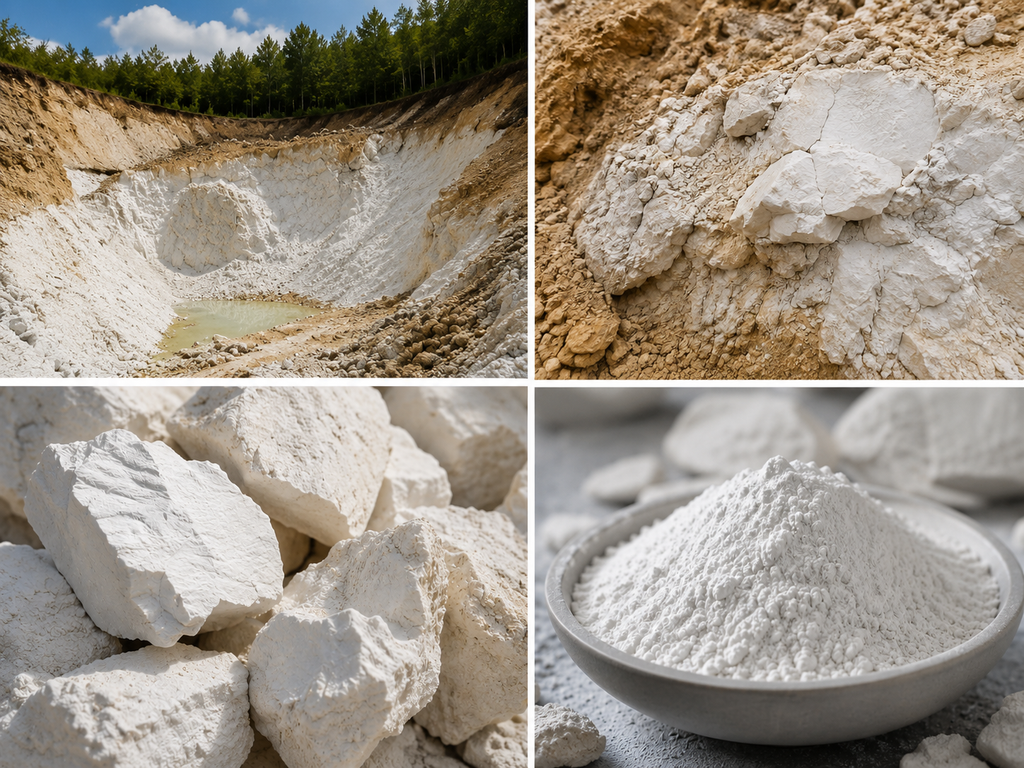
The material is made by weathering rocks that are rich in aluminium over millions of years. Its fine texture and white color are due to the main ingredient, kaolinite.
The name “China Clay” comes from Kaoling, the hills in China that were the first to commercially mine this mineral. In industrial and commercial contexts, the terms “kaolin” and “china” can be interchanged.
Once mined, kaolin is then processed by wet-washing and dry-washing. Sometimes, calcination can also be performed to create a clean, white powder. This powder may be used in specific applications. India is one of the biggest producers, with major deposits in Kerala and Rajasthan. Gujarat, Karnataka, and West Bengal have also significant deposits. Kerala is known for its high-shine, white kaolin. Rajasthan produces high-volume industrial grades.
What is the chemical composition of Kaolin clay?
Kaolin is composed of: Al2O3*2SiO2*2H2O. Kaolin is made up of:
- ~46% silicon dioxide (SiO2)
- ~40% aluminum oxide (Al2O3)
- A water with 14% of a chemistry-bound substance
The color of the product can also be affected by trace amounts titanium or magnesium depending on its grade.
Physical and chemical properties of Kaolin Clay
| Property | Value |
| Melting point | Above 1750degC |
| range of pH values | 4.5-7.5 |
| Mohs hardness | 2.0-2.5 |
| ISO Brightness | 80-92% |
| Particle Size | 0.2 to 1.2 microns |
| Cation exchange capacity | Low-cost |
| Chemical Reactivity | Inert |
Kaolin is used in many different ways. Kaolin is a refractory with a high melting point. Its fine particle size and vibrant color makes it an excellent addition to paint and paper. Seldom do minerals check so many boxes.
What are the main benefits of Kaolin clay?
You need to view these properties with a practical lens in order to understand the benefits. What are the benefits of kaolin?
Stability : Kaolin resists heat, chemicals and physical stress. Kaolin is widely used across many industries including automotives, construction, thermal insulation and refractories.
Brightness and Opacity : Kaolin ISO’s brightness is between 80-92%. This produces a white, clean finish on paints, papers and ceramics, without needing excess pigment.
Kaolin Particles of 0.1-2 Microns Size : These particles can be used for smoothing surfaces in cosmetics and coatings.
Chemical inertness : Because kaolin is inert chemically, it can be used as filler in ceramics.
Versatility : Kaolin has a high degree of versatility and is an economical material. This material can replace costly materials such as paints containing titanium dioxide. It reduces the production cost in many industries.
The global market for Kaolin reflects these advantages. Precedence research projects the global market for kaolin will reach $7.50 billion in 2034. It is an increase of 5.19 %. The success of kaolin in many sectors can explain this constant demand.
Kaolin Clay Applications By Industry
What is the use of Kaolin clay in ceramics?
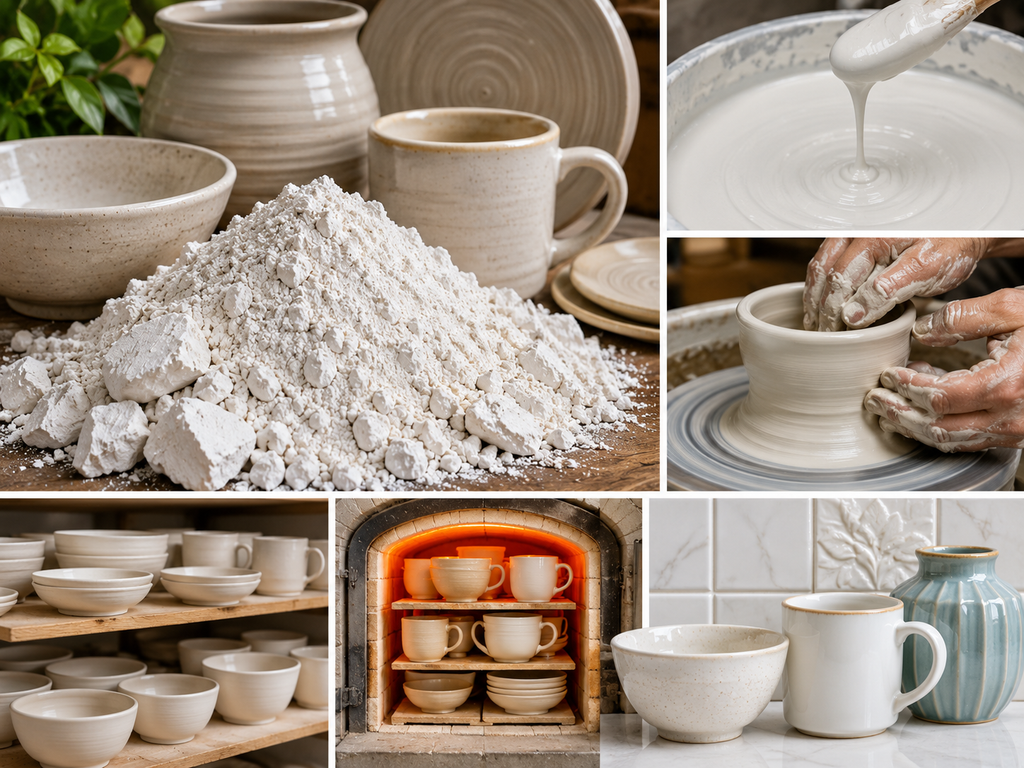
It is used to make ceramics due to its high plasticity. The material is also resistant to heat. It is also used to make ceramic tiles, tableware, and electrical porcelain.
Ceramics uses Kaolin.
- Surface smoothness, improved formability and formability
- Reduce shrinkage when firing
- Whiteness is improved.
- High firing temperatures maintain color stability
- Food grade non-toxic and safe for use
Calcined Kaolin, the best grade of Kaolin for ceramics with high quality is most commonly used. The whiteness is superior, and it has a better shape-retention.
How does Kaolin Clay help in paper production?
Kaolin plays a key role in the production of paper. The filler and coating agent are used to enhance the quality of any type of paper. This includes copy paper that is intended for daily use, as well glossy publications.
Kaolin filler increases brightness and transparency while reducing production costs. As a surface coating, it creates a smoother surface which increases the print’s vibrancy and enhances ink absorption.
Paper coatings can use Kaolin brighter than 90% GE. Calcined Kaolin can be used for publications, brochures and packaging where surface quality and opacity is important.
What is the use of Kaolin clay in paint industry?
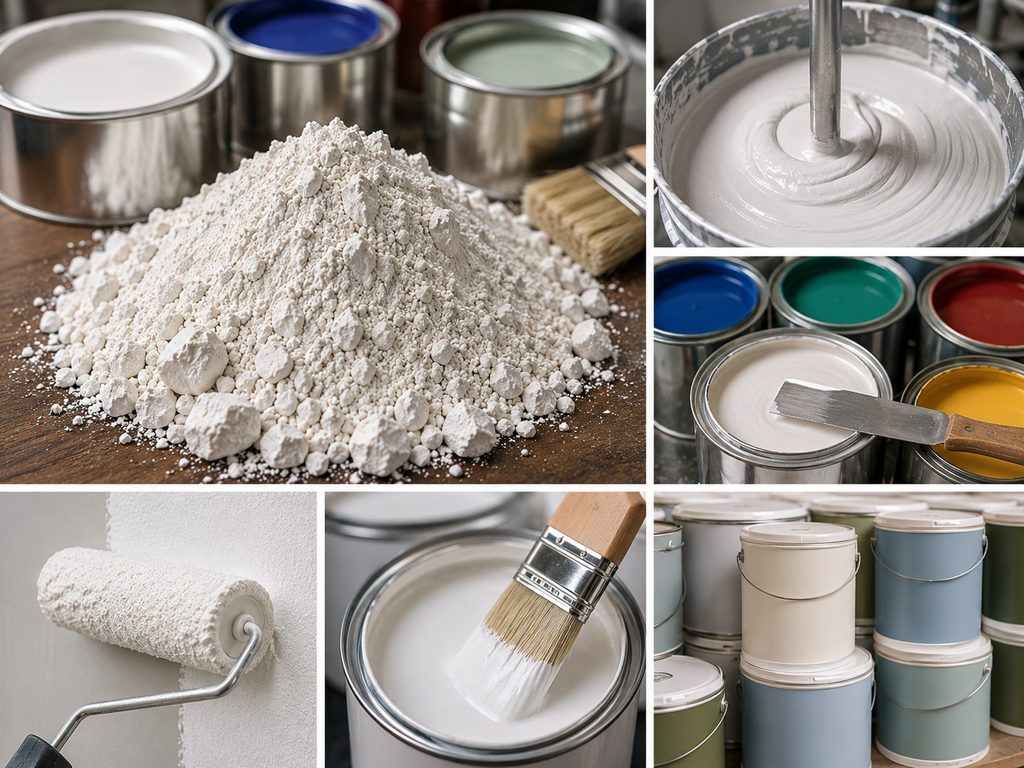
Kaolin can be used as a extension in paints, coatings and other products. Most commonly, calcined Kaolin is used.
- The pigment suspension and viscosity are improved.
- No additional pigments required to increase opacity
- Smoother and better spreadability
- Weather and wear resistant
- Reduce the amount of pigments that are expensive, such as Titanium dioxide (TiO2)
How important is Kaolin clay in rubber and plastic industries?
The rubber and plastic industry is constantly faced with the challenge of balancing strength, flexibility, and cost. Kaolin, a Filler that addresses the three challenges by strengthening polymer materials while not increasing their costs or making it brittle.
Different grades serve different purposes:
- Hard Kaolin : Improves the tensile strength and stiffness of rubber compounds. Improves resistance to wear.
- Calcined Kaolin can be used to make heavy duty rubber insulation.
- Kaolin water-washed : Preferable to rubber extrusions because it is free of grit.
- Kaolin Soft Grades is used for rubber, toys, and clothing.
Kaolin Clay or Other Clay Types? Which should you choose?
The first step in choosing the right clay is to understand what it does well, and where it falls short. Here is a comparison between the two:
| Clay type | Characteristics | Common Application | When choose Kaolin instead… |
| Kaolin | It is smooth, stable and mild. | Ceramics, paint | Minerals are a great choice for multi-purpose use. They’re safe and consistent. |
| Bentonite | Highly absorbent, rough texture; swells dramatically | Soil conditioning, drilling, and pond sealing | Need something milder for ceramics or skin? |
| Ball Clay | The white is less visible and more flexible. | Ceramics and tiles | It is important to have a better firing and better whiteness. |
| Montmorillonite | Like bentonite, but extremely absorbent | Industrial drilling, niche applications | Chemical predictability and skin safety are important |
| Illite | Absorbent but tends to clump | Some fillers for traditional ceramics | Need finer particle sizes and greater industrial versatility? |
Remember that kaolin, while not being the strongest clay or the most absorbent one, is the most reliable and can be used for many different purposes. The best starting materials for industries like ceramics, paper, that demand safety, consistency, and high quality finishes are kaolin.
Shree Ram Kaolin: Source Kaolin Clay With Confidence
Kaolin is a versatile mineral that can be both a benefit and a problem. The same minerals that are used to smooth glossy magazines also enhance paper quality, improve paint performance and strengthen ceramic products. There is a difference in grade, processing and application.
It is essential for many industries, including ceramics, paint, rubber and paper. Choose a supplier of kaolin who understands the needs of industry and can deliver consistent grades. The decision has a direct impact on the product’s performance and efficiency.
Shree Ram Kaolin is known for its high-quality industrial kaolin from India’s mineral rich regions. The company’s advanced processing abilities and commitment to quality allow it to serve a variety of industries in both domestic and international markets. Shree Ram Kaolin offers a wide range of high-quality solutions for businesses, including a variety of grades for specific applications and expert advice on the best material to use for your particular process.
FAQs
Kaolin Clay has many uses in industries such as paper, ceramics and paint. Its inert composition and brilliance makes it suitable for a wide range of applications.
Yes. Kaolin Clay is the same as China Clay. China Clay is a mineral first mined in China’s Kaoling Hills. Industrial buyers and suppliers use both names interchangeably.
Kaolin’s chemical formula is Al2Si2O5(OH)4. You can write it as Al2O3*2SiO2*2H2O. This clay is made up of 46% aluminium oxide, 40% silicon oxide and 14% chemically bound water.
Hydrous kaolin retains its original crystal structure as well as the chemically bound water. By heating calcined Kaolin at high temperatures, the water is removed. The resulting kaolin is more opaque and rigid. This is ideal for paper coatings, paints and ceramics which require increased durability and brightness.
Yes. Yes. This clay is gentle on sensitive and acne-prone skin because of the fine particles. This clay is mild, exfoliates and absorbs oils while soothing irritation.
Kerala is home to India’s largest kaolin deposits. Gujarat, Karnataka and West Bengal. Kerala produces the majority of white, high-brightness kaolin. Rajasthan is a major producer of kaolin for industrial use. Gujarati suppliers including The Sharad Group export industrial grade Kaolin to markets in Asia.
The grade that you require will depend on your specific requirements. Brightness is the most critical factor, as it’s essential in cosmetics and papers. The particle size is also important for smooth surfaces. Asking for data sheets from a kaolin supplier with experience is the best way to make sure you are making the right choice.

